Renowned German theologian Dietrich Bonhoeffer sustained a fellowship in an underground seminary during the Nazi years of Germany, and in Life Together, he recounts practical advice on how to sustain real Christian fellowship for families and groups.

The Hiding Place is Corrie ten Boom's account of helping Jews escape from the Nazi's. Her family perished in concentration camps and she was the only survivor—this book shines a light on the dark history of the time, about how faith ultimately overcomes evil.
First published in 1563, Foxe's Book of Martyrs challenges believers to live out the faith under any and every circumstance—no matter the cost—by telling the courageous stories of dozens of Christian martyrs tracing back to Reformation-era England.
A seminal work of the Protestant reformation, Institutes of the Christian Religion serves as an introduction to Protestant faith and is still read by theology students today; the book covers a variety of doctrines, from the church, to justification by faith, from God's sovereignty to Christian ...
The classic Regamuffin Gospel by Brennan Manning illustrates the need for the acceptance of God's grace by all people and emphasizes the power of grace to change lives—in spite of our own failures, misgivings and disappointments.
Yancey coins the term "scandal of grace" in his best-known book What's So Amazing About Grace?—he shares about grace at the street level and how Christians should show more of it, as grace is enough to cover even the most horrific sins of mankind.
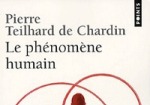
In his quintessential work and French bestseller, visionary theologian and biologist Pierre Teilhard de Chardin discusses the evolution of living organisms from inorganic matter—and argues that humanity, too, is also evolving towards an "omega point."
Shaeffer's 1981 manifesto was meant to be a Christian response to The Communist Manifesto of 1848 and the Humanist Manifesto, and literally calls Christians to be the salt of culture and history-makers by returning to faith in Jesus Christ and the Western Judeo-Christian values.
C. S. Lewis in his 1940 classic The Problem of Pain attempts to reconcile God's goodness and power with the reality of pain, suffering and evil in the world—tackling human sinfulness, animal suffering and the existence of hell—and rejecting these as reasons for disbelief in God.